Wardrobes & Storage
Wardrobe Design Guide: Sliding vs Hinged, Storage & Finishes
Everything that decides a good wardrobe — sliding vs hinged doors, internal organisation, finishes and how Chennai's humidity affects your material choice.
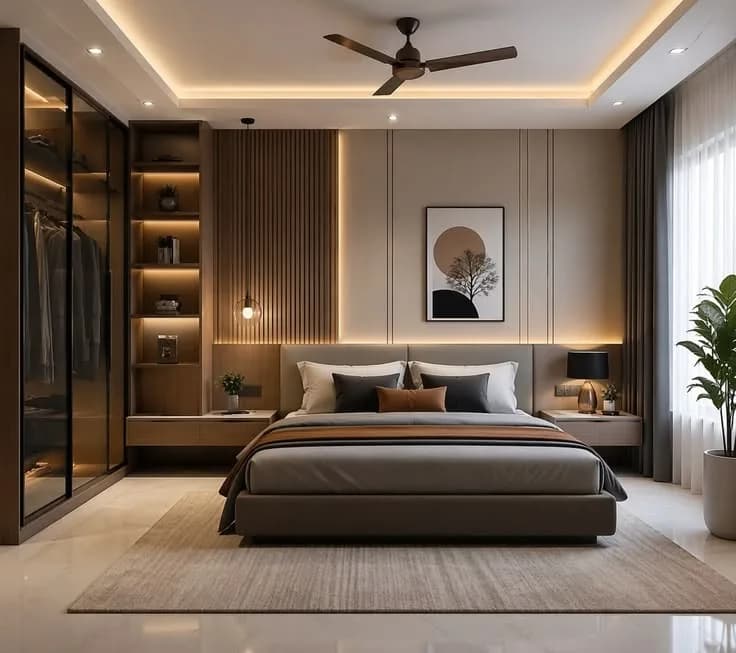
A wardrobe is the one piece of bedroom furniture you open every single day, so it's worth getting right. The look matters, but daily livability is decided by three things: door type, internal organisation and the material that survives Chennai's climate. Here's how to think about each.
Sliding vs hinged doors
This is the first decision, and it comes down to space and feel.
| | Sliding | Hinged | | --- | --- | --- | | Floor clearance needed | None — doors slide in place | Needs swing space in front | | Best for | Tight rooms, foot-of-bed wardrobes | Rooms with space to spare | | Access | See ~half the wardrobe at a time | Full, open access to everything | | Look | Sleek, modern, fewer lines | Classic; allows full mirrors | | Cost | Generally higher (track + mechanism) | Generally more economical |
Rule of thumb: if there isn't comfortable clearance to swing a door without hitting the bed, go sliding. Otherwise hinged gives you full access for less.
The part people forget: the inside
A beautiful wardrobe with a badly planned interior is a daily frustration. Plan the inside around what you actually own:
- Long-hang for dresses, kurtas and formal wear.
- Short-hang (double) for shirts and folded-over trousers — doubles your hanging capacity.
- Shelves for stacks and bags; drawers for innerwear and accessories.
- A locker for documents and valuables.
- Loft storage above for suitcases and seasonal bedding — essential in compact homes.
Count before you plan. Roughly how many garments hang vs fold? Where do saris, bags and accessories go? An interior designed to your real wardrobe contents beats a generic split every time.
Finishes — and why Chennai's humidity matters
The visible finish is a style choice — laminate for hard-wearing versatility, acrylic or veneer for a premium look. We compare those in detail in our laminate vs acrylic guide.
But in Chennai the more important choice is the core material, because humidity is the real enemy of joinery. Moisture-resistant boards (good-quality BWR/BWP-grade plywood or equivalent) resist swelling far better than ordinary board, especially along the floor line and on walls that back onto bathrooms. Spending here is invisible — and exactly where a wardrobe quietly succeeds or fails over ten years.
Mirrors, lighting and handles
- A full-length mirror on a wardrobe door saves buying a separate one and makes a room feel larger.
- Internal LED strips that switch on with the door turn a dark cabinet into something genuinely usable.
- Handleless or slim profiles read modern; classic handles suit a more traditional bedroom.
What drives the cost
Wardrobe price scales mostly with size (running feet × height), door type, core material and internal fit-out. A floor-to-ceiling sliding wardrobe with a fully organised interior and loft costs more than a basic hinged unit — but it also stores far more and lasts longer. Decide the internals first; they're what you live with.
When you're ready, our wardrobe design service page shows the range we build, and we'll visualise your wardrobe in 3D — inside and out — before anything is made.
Explore wardrobe designReady to see real numbers for your home?
Get a transparent, itemised estimate and a free HD 3D walkthrough.
Related reading
Materials
Laminate vs. Acrylic Finishes: Which Is Right for Your Kitchen?
A straight, practical comparison of laminate and acrylic shutter finishes for Chennai kitchens and wardrobes — looks, durability, maintenance and real cost.
23 June 20263 min read

Design Styles
Interior Design Styles Explained: Modern, Contemporary & Traditional
Confused by Modern, Contemporary and Traditional interiors? Here's a clear guide to the three styles most Chennai homes lean towards — and how to mix them.
24 June 20263 min read
Materials
The Brands We Specify in Chennai — and How to Read a Materials List
Plywood, laminates, hardware, wiring, sanitaryware and paint: the brands RGL Decors builds with, why brand names belong on your estimate, and how to check the one you were given.
12 September 20263 min read