Materials
Humidity-Proof Interiors for Chennai Apartments: A Complete Guide
Chennai's coastal humidity swells wood, peels laminate and rusts hardware. Ten ways to protect your interiors — materials, edge banding and ventilation.
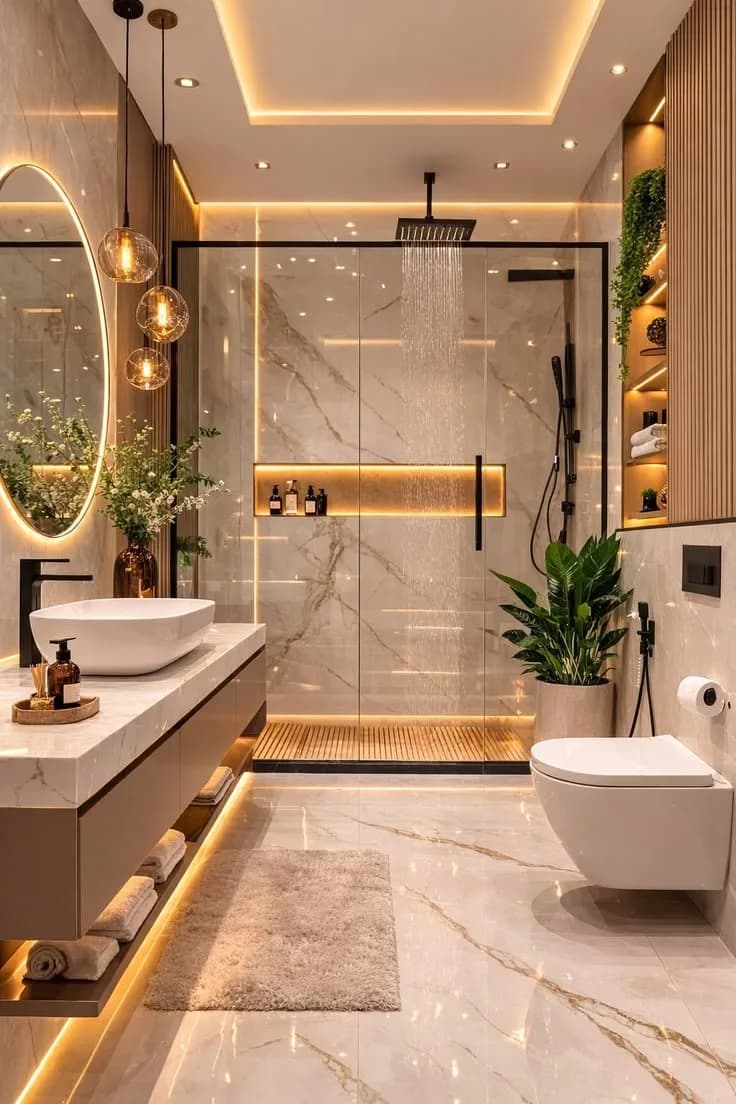
Chennai's coastal setting brings warm weather and sea breeze — and relentless, year-round atmospheric humidity. That climate takes a harsh toll on woodwork and finishes if the right materials and techniques aren't used.
Swollen cabinets, peeling laminates, hidden mould and rusting drawer runners can drastically shorten the life of your interiors. The good news: all of it is preventable with strategic planning and material choice.
How coastal humidity actually attacks interiors
Humidity raises the concentration of water vapour in the air. Wood, fabric and low-grade boards are porous, so they absorb that moisture over time like a sponge. The chain reaction:
- Volumetric swelling — shutters expand, doors rub and lose alignment.
- Delamination — substandard glues lose grip, so laminates bubble and peel.
- Hardware oxidation — standard zinc or iron hinges corrode, leading to creaking joints and broken channels.
- Microbial growth — dark, unventilated corners become breeding grounds for mould and stale odours.
Ten ways to protect your Chennai home
1. Mandate marine-grade core materials
- Wet zones (kitchen, bathroom vanities): certified BWP marine plywood (IS:710).
- Dry zones (living, bedrooms): BWR plywood (IS:303). Avoid cheap commercial MR ply, which degrades quickly in coastal weather.
2. Insist on 360° edge banding
Water vapour enters plywood through unsealed raw edges. Machine-pressed PVC edge banding, applied with hot-melt glue on all four sides of every panel, seals the core completely.
3. Upgrade to SS304 rust-resistant hardware
Insist on SS304 stainless steel or premium electro-coated soft-close hinges, lift-ups and tandem channels. Replace standard iron screws with stainless steel to prevent internal rusting that destroys screw-holding power.
4. Engineer ventilation passages
Air stagnation breeds mould.
- The wall gap: never install a wardrobe flush against an external wall. Leave a 15–20 mm air corridor to prevent capillary moisture transfer from the masonry.
- Ventilation grills: integrate discreet louvers at the rear or base of deep wardrobes to keep air moving.
5. Use hydrophobic, anti-fungal wall paints
Walls absorb humidity as fast as woodwork. Premium elastic, washable emulsions with anti-fungal properties act as a dampness barrier for a modest premium.
6. Restrict MDF and particle board
Keep MDF strictly to decorative wall accents, ceiling rafters or shutters in air-conditioned dry zones. Never use it for the structural carcass of main cabinetry.
7. Choose non-porous countertops
Engineered quartz or high-density granite have no micro-fissures, which prevents water logging, staining and bacterial growth.
8. Elevate cabinets with waterproof skirting
Build base units over elevated platforms or on heavy-duty PVC skirting legs, hidden behind matching laminate fascia. This keeps wood safely lifted off floors that get mopped daily.
9. Use dehumidifying accessories
For deep walk-in wardrobes, design in space for micro-dehumidifiers or charcoal moisture-absorbing bags. The gentle warmth of LED profile strips also helps keep internal air dry.
10. Partner with local execution experts
A beautiful design fails if the on-site execution is flawed. Localised professionals use the right adhesives, precise machine edge-banding and climate-tested installation techniques.
Material selection checklist
| Component | The humidity risk | The pro choice | What to avoid | | --- | --- | --- | --- | | Kitchen / vanity carcass | Severe water exposure, delamination | BWP plywood (IS:710) | MDF, particle board, MR ply | | Wardrobe frame | Dampness from walls, sagging shelves | BWR plywood (IS:303) | Commercial plywood | | Cabinet hinges | Salt-air corrosion, loose alignment | SS304 grade hardware | Standard iron / local zinc | | Countertops | Liquid staining, micro-mould | Quartz / polished granite | Porous marble or wood |
Frequently asked questions
How do I know my contractor is using genuine BWP plywood?
Genuine boiling-water-proof plywood carries the IS:710 ISI hallmark stamped in permanent ink across the board face, along with a CML (Certification Marks Licence) number you can verify on the Bureau of Indian Standards portal.
Why are my wardrobe doors bending after two years?
Almost always because thin 12 mm or 15 mm boards were used for long vertical shutters, or because low-density material absorbed atmospheric moisture. We enforce an 18 mm minimum for all structural shutters.
Does an open-plan layout reduce humidity?
Yes. Open living and dining layouts improve natural cross-ventilation, which lowers indoor moisture condensation and prevents localised mould spots.
Final thoughts
Living by the coast shouldn't mean compromising the longevity of your home. Choose certified moisture-resistant plywood, insist on SS304 hardware, and leave calculated ventilation gaps — and you can enjoy a flawless, low-maintenance home for decades.
Book a free site consultationReady to see real numbers for your home?
Get a transparent, itemised estimate and a free HD 3D walkthrough.
Related reading
Materials
Best Plywood for Modular Kitchens in Chennai (2026 Guide)
BWP vs BWR vs MR plywood for a Chennai modular kitchen — which grade goes where, the right thickness, what to inspect before buying, and trusted brands.
2 July 20264 min read

Materials
Anti-Termite Interior Solutions in Chennai: Protect Your Home for Years
Termites hollow out wardrobes from the inside, invisibly. How to choose termite-resistant plywood, spot early warning signs and build a lasting barrier.
5 July 20264 min read
Materials
MDF vs Plywood Wardrobes: Which Is Better for Chennai Homes?
MDF or plywood for your wardrobe? A structural comparison — strength, moisture resistance, screw holding, lifespan and cost — for Chennai's coastal climate.
3 July 20264 min read